

Belize program concepts in development
Five concepts, at different stages, none of them yet a product. They exist because the underlying field experience exists, and because institutions keep asking for versions of them. What is on this page is the thinking, not an offer.
Each is developed against published standards rather than house preference: BS 8848 for fieldwork organized outside the United Kingdom, ISO 21101 and 21102 for adventure tourism safety management and leader competence, and the GSTC criteria. None is offered for sale, and none will be until the partner agreements, permissions, insurance and safety planning behind it are complete.

Experiential Learning & Study Abroad
Semester and short-course field programs where the learning is designed first and the itinerary follows from it. Academic credit alignment, host-community partnership, and a safety case a university risk committee will accept.
Behind it: six years as Overseas Site Director for CISaustralia, running Australian and US university field programs in Belize — monthly groups, academic credit compliance, six years without a critical incident.
Best-fit partners: Universities, study-abroad providers and faculty-led programs.
Stage: concept. No partner agreements or academic approvals are in place.

Dive Tourism & Marine Conservation
Marine programs built around what a reef site can actually absorb — diver load, seasonality, survey method, and the difference between conservation work and conservation atmosphere.
Behind it: four and a half years running an island dive operation inside the Sapodilla Cayes Marine Reserve, one of the seven component areas of the UNESCO-inscribed Belize Barrier Reef Reserve System, including the medical evacuations.
Best-fit partners: Dive operators, marine conservation organizations and educational providers.
Stage: concept. No operator agreements, permissions or insurance in place.

Ecotourism and Conservation-Linked Travel
Nature-based travel where the conservation link is structural rather than described — who is paid, what is monitored, and what happens to the site when the visitors leave.
Behind it: a master's thesis on visitor management in large protected areas, and a year as destination manager at a research station inside Chiquibul National Park.
Best-fit partners: NGOs, protected-area managers and destination-development partners.
Stage: concept. No site, partner or access agreement confirmed.
Three further concepts
These are earlier than the first two. They are on the page because the questions behind them are live, not because there is a plan to launch them.

Purpose / Philanthropy Travel
Donor and foundation travel that does not overstate what a visit achieves. The design question is whether the trip funds the work or merely observes it, and being willing to say which.
Best-fit partners: Foundations, donors, NGOs and conservation supporters.
Stage: early concept. No beneficiary organization or partner involved yet.
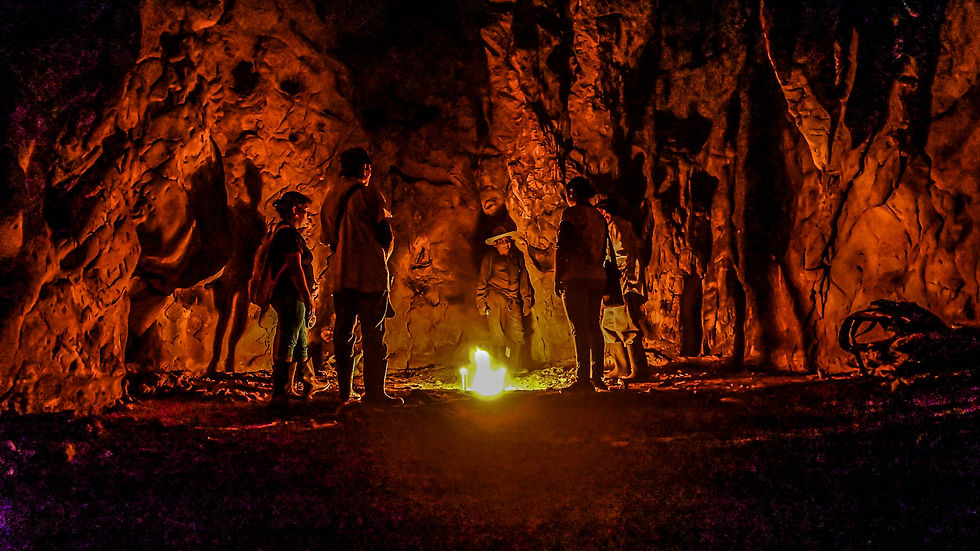
Future Adventure Concepts
Cave, river, canopy and remote-area programming. The limiting factor is not the terrain but the safety system around it: guide standards, emergency planning, evacuation distance, and who carries the liability.
Behind it: a ten-part risk assessment documenting more than forty hazards across five operating environments, an emergency action plan and an incident reporting system, written for a research station inside Chiquibul Forest Reserve.
Best-fit partners: Specialist operators, safety professionals and protected-area stakeholders.
Stage: long-term. Nothing here proceeds without permissions, guide standards, insurance and an emergency system documented and in place.
Nothing on this page is a departure, a confirmed partnership, or a bookable product. Where a concept names a capability, that capability is mine; where it implies a partner, there is not one yet.
Why nothing here is for sale
BelizeWise is not a tour operator, a booking platform or a licensed DMC. A concept becomes a product only after partner agreements, permissions, safety systems, insurance and supplier validation are all in place and documented — and several of these concepts will not survive that.
Publishing them at this stage is deliberate. An institution deciding whether to work with this practice should be able to see what is being thought about, and to tell the difference between a concept and an offer.